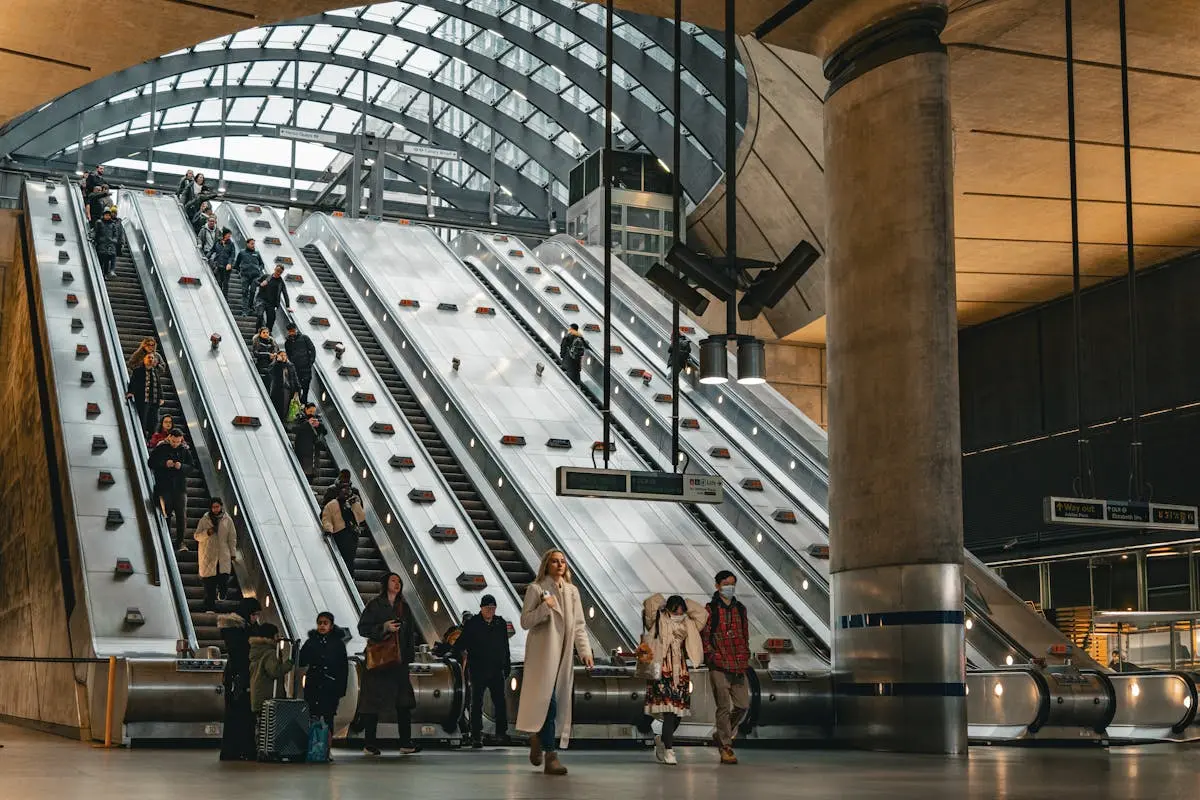
This is the guide we wish someone had handed us: practical, beginner-proof, and focused on the questions you will absolutely ask - including, yes, “Do I press a button to open the doors?”
The Tube in 60 seconds
If you only read one section, make it this. Everything below is the short version of the long version that follows.
- Tap in and out with the same payment method. Same card, or same phone/watch. Do not mix them.
- Doors open automatically on the Underground. You do not press a button in normal service.
- Stand on the right of escalators. The left is for people auditioning for the 100-metre final.
- Let people off before you get on. London will judge you, silently, forever.
- Paper single tickets are expensive. Use contactless or Oyster instead.
- Peak fares cost more. Weekdays 06:30-09:30 and 16:00-19:00.
- If you miss your stop, get off at the next one. Do not attempt a dramatic leap.
What “the Tube” actually is (and what it gets confused with)
Londoners use “the Tube” the way people use “Hoover”. It can mean the literal thing, or it can mean “any train-ish thing that gets me somewhere”. In reality, several separate networks overlap across the city, all accepted by the same payment methods and shown on the same map.
London Underground (the actual Tube)
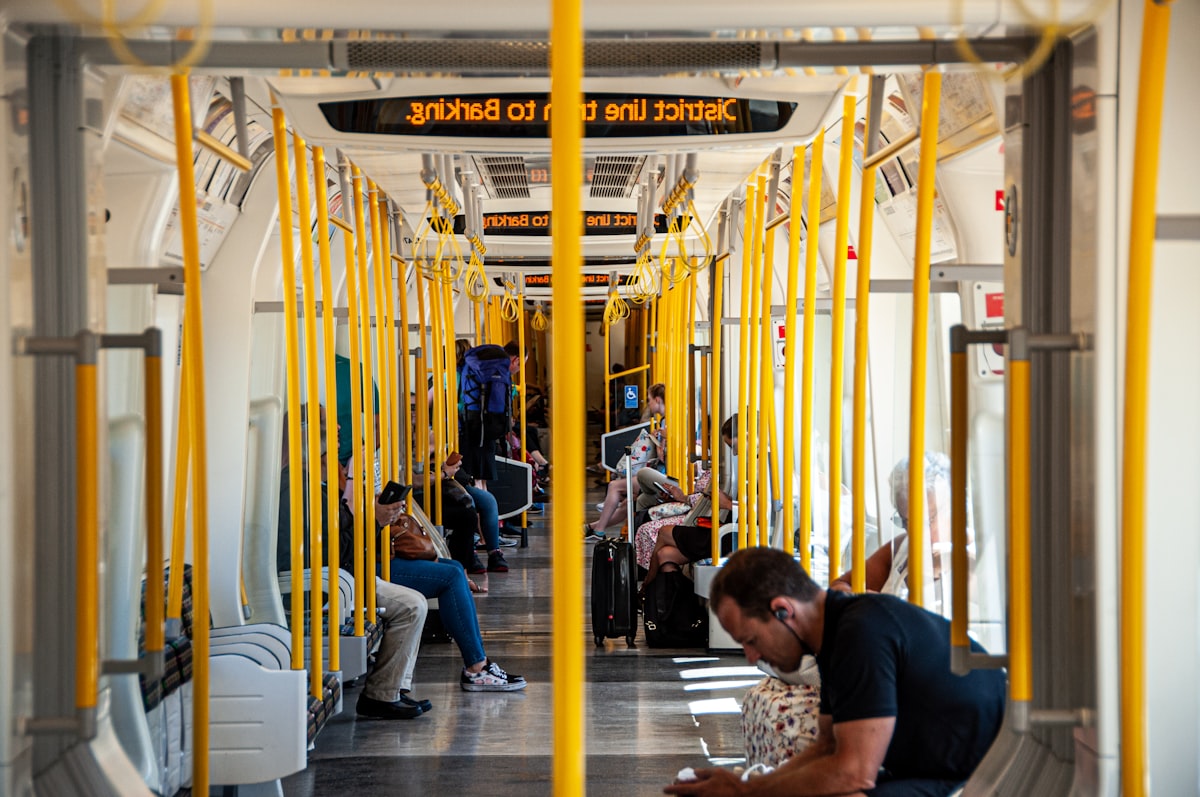
This is the classic network with coloured lines on the map, dating back to 1863. It includes deep-level lines (narrow tunnels, generally hotter, more “proper Tube” vibes) and sub-surface lines (bigger, air-conditioned trains with more daylight): Circle, District, Hammersmith & City, and Metropolitan. If you are curious about why the deep lines are so warm, we wrote a full analysis of Tube heat. For the engineering behind the system - power, signalling, and maintenance - see how the Tube actually works.
London Overground
In 2024, the Overground was rebranded from a single orange line into six individually named and coloured lines. The roundel is still orange, but each line now has its own identity and colour on the map. It operates more like city rail - often above ground - and is very useful for getting across London without going through Zone 1.
| Line | Colour | Key route |
|---|---|---|
| Lioness | Amber | Watford Junction - Euston |
| Mildmay | Blue | Stratford - Richmond / Clapham Junction |
| Windrush | Red | Highbury & Islington - Clapham Junction / Crystal Palace / West Croydon |
| Weaver | Maroon | Liverpool Street - Cheshunt / Enfield Town / Chingford |
| Suffragette | Green | Gospel Oak - Barking Riverside |
| Liberty | Grey | Romford - Upminster |
Elizabeth line
Big, fast, and (in the central section) very new. It behaves like a cross between a metro and a regional train: long platforms, roomy trains, and full mobile coverage through stations and tunnels. It runs from Reading and Heathrow in the west through central London to Shenfield and Abbey Wood in the east, and it is a genuine game-changer for cross-London travel.
DLR
Driverless Light Railway in east London. Great views, surprisingly calming, and extremely good for Canary Wharf, Greenwich, and London City Airport. Sit in the front seat for the full “pretend you are driving” experience.
National Rail
Some National Rail services in London accept contactless and Oyster within the pay-as-you-go area. If it is on the TfL map, you are usually fine. For journeys further out, always check - the payment rules vary by operator.
Underground, Overground, Elizabeth line, and DLR all use the same contactless/Oyster payment system. You tap in, tap out, and the system works out your fare. The only thing that changes is the train you are sitting on.
Paying for travel: contactless vs Oyster vs “why is this so complicated?”
London is extremely modern about payment and extremely old-fashioned about everything else (including tunnels built in the 1800s). Here are your three options, ranked.
Contactless
A contactless bank card, or Apple Pay / Google Pay on your phone or watch. Tap in and out. You get pay-as-you-go fares with automatic daily and weekly caps.
- No top-up needed
- Same caps as Oyster
- Works on all TfL services
Oyster
A reusable card you load with credit or a Travelcard. Useful if you cannot use contactless or are managing travel for someone else.
- Good for children, visitors
- Some railcard discounts easier
- Non-refundable card cost
Paper tickets
A paper single for Zones 1-6 is around £7. They are deliberately priced to discourage everyday use. Emergencies only.
- No daily/weekly capping
- Much more expensive
- Easy to lose
Mixing devices: Do not switch between your physical card and your phone/watch if they are linked to the same bank account. The system sees them as different “cards”, and you can lose daily capping and be charged more. Pick one device and stick with it for the whole day.
The wallet double-tap: If you have two contactless cards in the same wallet or cardholder, the reader may grab the wrong one - giving you an incomplete journey and a maximum fare charge later. The fix is simple: tap with the card or device by itself, or keep your travel card in a separate pocket.
Fares, caps, and the part where you stop haemorrhaging money
London’s fare system is zone-based. The more zones you cross, the more you pay. But there is a safety net: daily and weekly caps mean that after a certain amount of spend, the rest of your travel is free.
How capping works
Think of it as: “pay as you go, but we stop charging after a point.” Daily caps reset each day. Weekly caps on contactless run Monday to Sunday (not a rolling seven days, which matters if you arrive midweek).
Here are key figures. From 1 March 2026, TfL is increasing adult PAYG single fares by about 6%, while freezing daily and weekly caps. For the full fare tables and how to pay less, see our complete guide to Tube fares.
| Journey type | From March 2026 | Notes |
|---|---|---|
| Zone 1 single (peak) | £3.10 | Weekdays 06:30-09:30 |
| Zone 1 single (off-peak) | £3.00 | All other times |
| Zones 1-2 daily cap | £8.90 | Maximum you’ll pay in a day (frozen) |
| Zones 1-2 weekly cap | £44.70 | Mon-Sun on contactless (frozen) |
| Zones 1-6 daily cap | £16.30 | Covers Heathrow journeys (frozen) |
| Bus/tram single | £1.75 | Frozen until July 2026 |
Individual fares rise from March 2026, but daily and weekly caps remain frozen until at least 2027. Your per-journey cost goes up slightly, but the most you can spend in a day or week stays the same. The bus and tram daily cap is £5.25, also frozen until July 2026.
Not sure whether PAYG, a weekly Travelcard, or an annual season ticket is cheapest for your commute? Our calculator compares them all using the 2026 fares above - just enter your zones and how many days you travel.
Try the commute calculator →Forgetting to tap out
If you do not touch out, your journey is marked incomplete and you may be charged a maximum fare (because the system cannot tell where you got off). If that happens, you can claim a refund - but TfL notes you may not get one if you have already claimed three maximum fare refunds in the same calendar month.
Pink readers: the “cheaper route” trick
Sometimes the same start and end stations can be reached via Zone 1 or by avoiding Zone 1, and the fare differs. At certain interchange stations you will see pink card readers. Tap them when you change trains to tell the system you avoided Zone 1 and should be charged the cheaper fare. If you are visiting central London and sticking to Zones 1-2, the chances are you will never see one of these - they only matter for specific cross-London routes that skirt the edge of Zone 1. For full fare tables, caps, discounts, and the tapping mistakes that cost you money, see our complete guide to Tube fares in 2026.
Delay compensation
Delays are not just bad luck. If you are delayed by 15 minutes or more on TfL services, you can often claim a refund through your TfL online account or contactless refund page. It takes a couple of minutes and the money goes back to your card.
Buses and trams
Visitors focus on the Tube, but London’s buses are often the easiest way to cross short distances in central London - and they are essential when the Tube is disrupted.
The key difference: on buses, you only tap once (when you board). There is no tap out. If you tap out by mistake at the card reader near the exit, you could trigger an extra charge.
You can make unlimited bus and tram journeys within one hour of your first tap for a single fare of £1.75. After that, the daily bus and tram cap is £5.25 (frozen until July 2026). Buses are often the cheapest way around London, and they run all night.
Buses do not show well on the Tube map, so Citymapper is usually the best tool for “one bus plus a short walk” routes. It is also the fastest way to find alternatives when a Tube line goes down.
Planning journeys without developing a personal feud with the map
The Tube map is iconic, but it is not geographically accurate. It is a diagram designed to help you understand connections, not distances. Two stations that look far apart on the map might be a three-minute walk on the surface. For more on this, see our guide to Tube maps.
The diagram distorts distances so much that most people have no idea where stations really are. Our game gives you a station name and a real map - pin the location and see how close you get. It is surprisingly hard (and surprisingly addictive).
Play Mind the Map →The tools that make life easier
- TfL Journey Planner - reliable for disruptions and accessibility information. The official source.
- Google Maps / Apple Maps - good for door-to-door directions that mix walking, buses, and Tube.
- Citymapper - popular with Londoners for step-by-step directions and real-time departure boards.
Setting up delay alerts
Journey planners are great for single trips. But if you are in London for a week and relying on the Tube every day, the last thing you want is to arrive at a station and discover the Central line has been suspended since 08:00. Similarly, if you commute daily, the morning ambush is real: everything looks fine, and then somewhere between Clapham and Stockwell the Northern line decides to have a moment.
That is what line status alerts are for. You pick the lines you care about, the time window that matters, and you get an email when something goes wrong - before you leave the hotel or your house, not after you are stuck underground.
We built Tube Notifications to solve this for anyone using the Tube - whether you are visiting London for a few days and want to keep track of disruptions, or you commute daily and need to know before you leave home. Choose your lines, set your hours, pick the days, and filter by severity. No app to download, no account to manage - just an email when something actually affects your journey. It takes about 30 seconds to set up and it is completely free.
Set up a free alert →What happens at the station (and how to look like you belong)
Barriers and tapping
Most stations have ticket gates. Tap your card or device on the yellow reader and walk through when it opens. If the barriers are open (some quieter stations), still tap - you need a recorded start and end for correct fares.
Finding the right platform
Signs are your friend. You usually follow three things:
- Line name and colour (e.g., Northern line)
- Direction (often shown as the last stop on that branch, e.g., “Morden”)
- Platform number
Branching lines are where beginners suffer. The Northern line is famous for this - it splits in both directions, and getting on the wrong branch means an unexpected tour of south London. If unsure, check the electronic display on the platform and the front of the train. You may also encounter a train that terminates mid-route (a “short working”) - this is normal and usually means the line is turning trains around to match demand.
Escalators
Stand on the right. Walk on the left. If you stop at the top to check your phone, you will learn what British passive aggression feels like in its purest form.
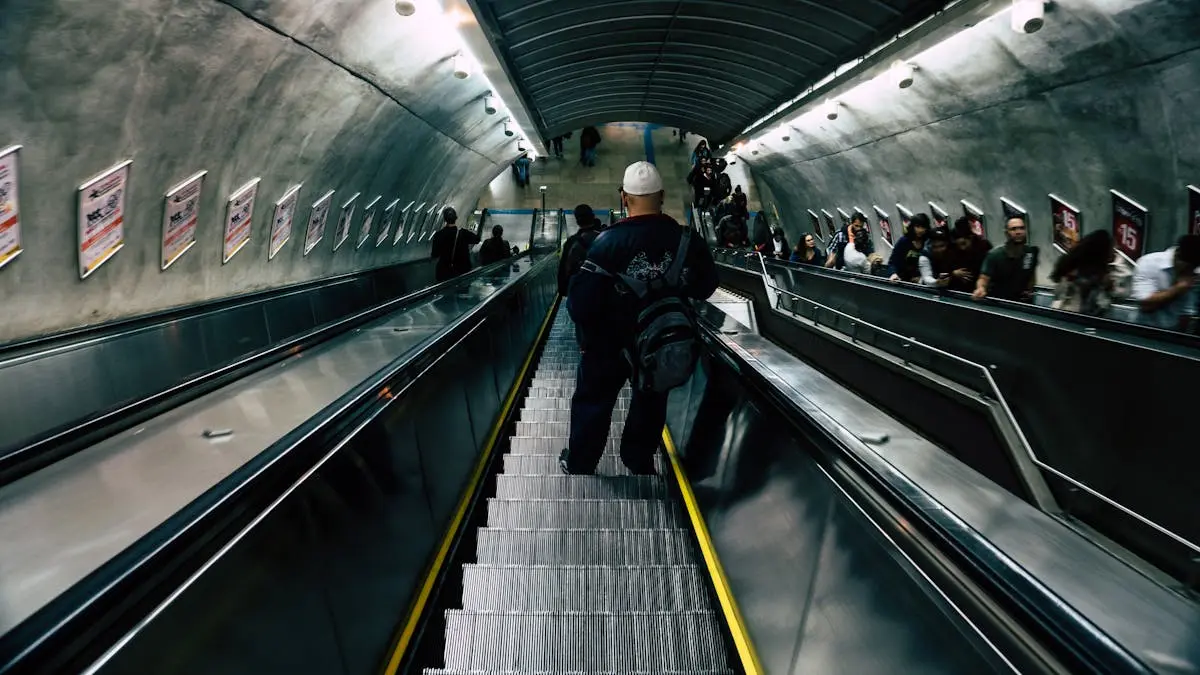
Stand on the right, walk on the left. Photo via Pexels.
Choosing the right exit
Beginners often lose more time leaving stations than riding trains. Follow “Way out” signs, then check the exit sign - many stations list street names, landmarks, or “Exit 1 / Exit 2”. At larger stations like King’s Cross or Bank, choosing the wrong exit can add five to ten minutes to your journey.
Out-of-station interchanges
Some interchanges require you to exit one station and walk to another nearby. You tap out, walk two to ten minutes, then tap in again - and it still counts as one continuous journey if you do it within the allowed time window (usually around 30 minutes). The system handles the fare automatically. Common examples include Bank/Monument, and Paddington (Underground to Elizabeth line). It links nicely to the walking-distance point: the map often does not make it obvious that these stations are close enough to connect.
On the train: doors, buttons, and other very obvious questions
Do you press a button to open the doors?
On the London Underground: no. Doors are controlled by the train operator and open automatically at every station. On some trains, door buttons exist but they mainly allow passengers to re-open doors at terminals after they have auto-closed.
On Overground and National Rail: sometimes yes. Doors may be “released” (you hear a beep and the button lights up), and you need to press it. The Elizabeth line can feel more like mainline rail than metro, and door behaviour varies.
Rule of thumb: If the doors do not open, look for a lit button and press it once. If there is no button, wait two seconds before assuming London has trapped you forever.
Where do you stand?
Near the doors is fine until the train fills up, then move into the centre. If you stand in the doorway while people try to exit, you become a temporary public sculpture that everyone resents.
Is it safe?
Generally, yes, especially in busy areas. Still, treat it like any big-city transport system:
- Keep your phone secure near doors - opportunistic snatches happen, particularly as doors close.
- Mind your bags in crowds.
- Report anything suspicious to staff, or text 61016 (British Transport Police non-emergency line). In an emergency, call 999.
Will my phone work underground?
This has improved dramatically, but it is not everywhere yet. As of early 2026:
- 4G and 5G coverage is now common in central stations and expanding quickly, with around half of underground stations connected so far. TfL and Boldyn Networks are aiming for full network coverage by the end of 2026.
- The Elizabeth line has had full mobile coverage from day one.
- Wi-Fi is available at all Tube stations (though not in tunnels), provided free by Virgin Media O2.
In practice, you will have signal at many central stations and on newer lines, but expect dead spots on some deeper sections. The gaps are closing fast.
Unwritten rules that Londoners expect you to know
Stand right, walk left. The escalator rule. Genuinely enforced by glares.
Let people off first. Step aside, let the carriage empty, then board.
Move down inside the carriage. The doors are not the place to set up camp.
Take your backpack off. In rush hour, a backpack on your back takes up the space of another person.
No speakers. Use headphones or enjoy the silence. Londoners consider this non-negotiable.
People are quiet. Londoners tend not to chat on the Tube - it is not unfriendliness, just habit. You will not offend anyone by keeping to yourself.
Priority seats. If you are sitting in one, look up occasionally and offer it if someone needs it. Ignoring this gets noticed.
Luggage near the doors. If you have a suitcase, stand near the doors or the luggage area - do not block the aisle.
Peak times, off-peak times, and how to avoid becoming human flatbread
TfL defines peak for pay-as-you-go fares as Monday to Friday (not public holidays), 06:30-09:30 and 16:00-19:00. Outside those windows, fares drop and trains are less packed.
One useful nuance: some journeys into Zone 1 during the evening peak (16:00-19:00) are actually charged at off-peak rates. TfL’s fare calculator will show you whether your specific journey qualifies - it is worth checking if you commute inward in the afternoon.
Two practical tricks:
- If you can travel just after 09:30, do it. London becomes 30 percent less angry.
- Move down the platform. People cluster near stairs and escalators like moths to a bright light. The ends of the platform are emptier.
Whether you are commuting daily or exploring London for a few days, setting up a delay alert for the lines you use means you will know before you head out whether today is a “normal journey” day or a “find an alternative” day.
Night travel: how late does it run?
Do not assume the Tube runs all night. Most lines shut around midnight and reopen around 05:00. The exception is the Night Tube, which operates on Friday and Saturday nights on selected lines.
| Line | Night Tube? | Frequency |
|---|---|---|
| Victoria | Yes | Every ~10 minutes |
| Central | Yes | Every ~10 minutes |
| Northern | Yes (Charing Cross branch) | Every ~8 minutes |
| Piccadilly | Yes | Every ~10 minutes |
| Jubilee | Yes | Every ~10 minutes |
| Others | No | Last trains ~midnight |
Night Tube fares are treated as off-peak. If you are relying on night services, check the line status before you commit to a plan that ends with you eating a kebab in a bus shelter at 03:12.
For the full breakdown of which lines run when, route maps, and your alternatives when the Tube shuts, see our Night Tube and 24-hour travel guide.
Accessibility and travelling with luggage
London is improving accessibility, but the network is not uniformly step-free. Here is the current picture:
- All Elizabeth line stations are step-free from street to platform.
- All DLR stations are step-free.
- Around 95 Underground stations offer step-free access, with more being added.
- Most Overground stations have step-free access, though some older stations do not.
TfL’s Journey Planner has a “step-free” filter that shows only accessible routes. Use it.
Step-free does not help if the lift is broken. We built a free lift alert service that emails you when a lift at your station goes out of service. If you rely on lifts, it takes 10 seconds to set up and can save you a wasted journey.
Luggage tips
- The Elizabeth line and sub-surface Underground lines are much easier with luggage - wider carriages, more floor space, and fewer stairs.
- Avoid deep-level stations with long escalators if you are carrying heavy bags. Covent Garden, for instance, has 193 steps and no lift.
- If coming from an airport, the Elizabeth line is usually the best option for bags - it was designed for it.
Airports: the bit you care about when you are jet-lagged
Airports are where many London journeys begin and where expensive mistakes happen. Here is the short version.
Heathrow Airport
Elizabeth line
Fast, comfortable, and designed for luggage. Our top recommendation for most travellers. ~£13.50 off-peak, ~£14.90 peak (pay as you go to Zone 1).
Piccadilly line
Cheapest rail option, ~50-60 min to central London. Can be crowded with luggage. ~£3.50 off-peak, ~£5.50 peak.
Heathrow Express
15 min to Paddington, not part of normal capping. ~£25 walk-up, from ~£5.50 if booked in advance.
Other London airports
London City Airport
Easiest by DLR. The airport has its own station. Quick, cheap, and straightforward.
Gatwick Airport
Gatwick Express, Southern, or Thameslink to central London. All three accept contactless and Oyster pay-as-you-go (and you still benefit from daily capping), so you do not need to queue for a ticket.
Stansted Airport
Stansted Express or coach. Contactless and Oyster are not accepted at Stansted Airport station - you need to buy a ticket. A pay-as-you-go extension has been postponed until summer 2026.
Luton Airport
Thameslink to Luton Airport Parkway, then a shuttle bus. Contactless pay-as-you-go works on Thameslink, but Oyster is not valid beyond the zone boundary. Check before you travel.
TfL notes that Tube and Elizabeth line journeys to and from Heathrow are charged peak fares if they start, end, or pass through Zone 1 during peak hours. If you are landing early in the morning, this might not matter. If you are heading out at 08:00, it will.
Differences you will notice if you are coming from abroad
London gets a huge mix of visitors and newcomers. Some Tube behaviour is only “normal” because London has agreed it is normal.
From New York (Subway)
London is cleaner and more orderly, but smaller in the deep tunnels. Platform manners are stricter - “let people off first” is basically law. Service info is more centralised, with heavy app reliance.
From Paris (Métro)
London blends metro and rail more visibly (Underground, Overground, Elizabeth line all interlace). Ticketing is simpler in one way (tap in and out), but the zone and cap logic can feel like it was designed by an accountant with a grudge.
From Berlin (U-Bahn)
London leans harder on gates and tapping, rather than ticket validation and spot checks. Late-night service is patchier unless you are on Night Tube corridors.
From Tokyo / Singapore / Hong Kong
Those systems are newer, air-conditioned, and often have platform screen doors. London’s deep lines will feel older and warmer. On the other hand, the Elizabeth line and DLR will feel familiar - modern, spacious, and well-signed.
The one genuinely funny constant: everyone believes their line is uniquely cursed. Even with data showing Victoria and Central as consistent outliers, every line has devotees insisting that their commute is the true circle of hell.
The one thing that does not change between cities: no matter where you commute, you will convince yourself your line is the worst. Set up a free delay alert for the lines you use and find out for certain.
Understanding the Tube map: all the lines at a glance
Here is every line you will see on the current TfL map, colour-coded. Bookmark this if you are still learning which colour is which.
| Line | Type | Good to know |
|---|---|---|
| Bakerloo | Deep tube | Short but reliable. Oldest rolling stock on the network. |
| Central | Deep tube | Long east-west line. Notoriously hot in summer. |
| Circle | Sub-surface | Not actually a circle anymore - it spirals. Air-conditioned S-stock trains. |
| District | Sub-surface | Multiple branches west. Air-conditioned. Shares track with Circle and H&C. |
| Hammersmith & City | Sub-surface | Air-conditioned. East-west across north London. |
| Jubilee | Deep tube | Modern extension with platform edge doors at some stations. |
| Metropolitan | Sub-surface | Goes furthest out - deep into Hertfordshire and Buckinghamshire. |
| Northern | Deep tube | Splits in both directions. Check the branch before boarding. |
| Piccadilly | Deep tube | Serves Heathrow. New air-conditioned trains arriving from late 2026. |
| Victoria | Deep tube | Fast and frequent, but the hottest line on the network. |
| Waterloo & City | Deep tube | Only 2 stations. Commuter shuttle. Closed weekends and evenings. |
| Elizabeth | Crossrail | Newest. Fast, spacious, air-conditioned, full mobile coverage. |
| DLR | Light rail | Driverless. Great views. Covers east and southeast London. |
| Lioness | Overground | Watford Junction - Euston. |
| Mildmay | Overground | Stratford - Richmond / Clapham Junction. |
| Windrush | Overground | North-south through east London. |
| Weaver | Overground | Liverpool Street - northeast London. |
| Suffragette | Overground | Gospel Oak - Barking Riverside. |
| Liberty | Overground | Romford - Upminster shuttle. |
Every line listed above has a live status page on our site with real-time updates, reliability statistics, and recent disruption history.
Some examples that catch newcomers out: Leicester Square to Covent Garden is just 250 metres apart - it is the shortest distance between any two Tube stations on the entire network, and walking takes less time than waiting for a Piccadilly line train. Charing Cross to Embankment is barely 270 metres. Mansion House to Cannon Street is 310 metres. In all three cases, you are genuinely faster on foot.
A few final “save yourself” tips
- Learn two routes. London loves closing the one you use most. If the Northern line is down, can you take the Victoria line plus a bus? Having a backup turns a crisis into a minor annoyance.
- Check whether your route avoids Zone 1. If it does and there is a pink reader at the interchange, tap it.
- Do not bring certain e-bikes and e-scooters onto TfL services. Restrictions apply for safety reasons - check the TfL website.
- If you lose something, TfL has a formal lost property process at tfl.gov.uk/lost-property. It is not instant, but it does work.
- The map is not to scale, and neither is a Londoner’s sense of what counts as “near”.
- Use contactless. It is cheaper than paper tickets, easier than Oyster, and caps your daily and weekly spend automatically.
- Tap in and tap out. Always. Even when barriers are open. Forgetting costs you money.
- Peak fares apply 06:30-09:30 and 16:00-19:00 on weekdays. Travel just after 09:30 if you can.
- The Overground is now six named lines, not one orange blob. Each has its own colour and route.
- 5G coverage is nearly universal underground. Full network coverage expected by end of 2026.
- Set up a free delay alert at tubenotifications.co.uk - useful for commuters and visitors alike. Know when a line goes down before it ruins your day.
- Stand on the right. We cannot stress this enough.
The Tube can feel intimidating for about three trips. Then you will suddenly find yourself giving directions to someone else while pretending you have always lived here. Tap in. Tap out. Stand on the right. Do not block the doors. Do not overthink the map.
And if you do get lost, congratulations: you are now having an authentic London experience.
- TfL fares and payments - official fare tables and capping details
- 4G and 5G on the Tube - TfL mobile coverage rollout
- Night Tube - official hours and routes
- TfL accessibility information - step-free stations and journey planning
- London Overground line names - the 2024 rebrand explained
- TfL Journey Planner - the official route finder
We build highly customisable tube alerts for the London Underground, Overground, DLR and Elizabeth line. Whether you are a daily commuter or a tourist visiting for a week, choose the lines you will be using, set a time window, and we will only email you when something actually goes wrong. Free, no app required, and takes 30 seconds.
Set up a free alert →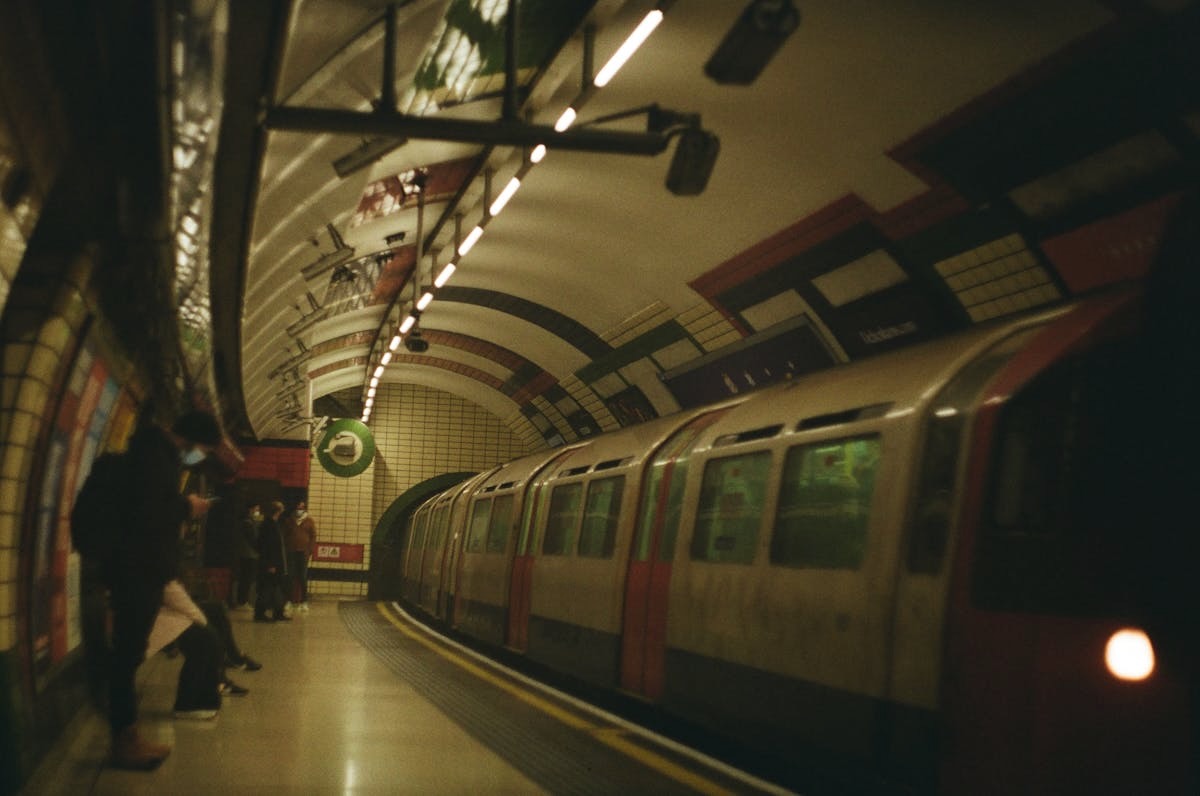
Is the Tube 24 Hours? Night Tube Guide
Which lines run all night, when they operate, and your alternatives when the Tube shuts.
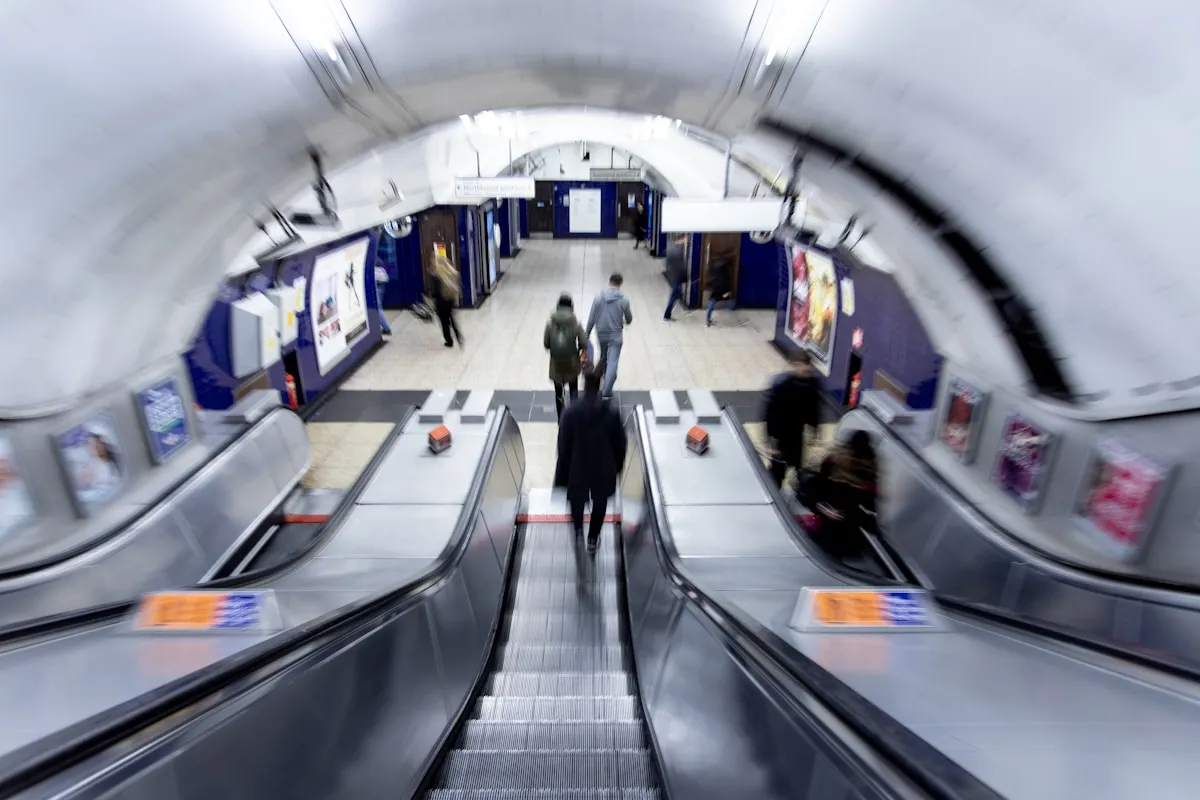
Tube Fares in 2026
Full fare tables, March 2026 changes, caps, discounts, pink readers, and the tapping mistakes that cost you money.
Why Is the Tube So Hot?
Platform temperature data, the physics of tunnel heat, and what TfL is actually doing about it.
This guide is regularly updated. Send us a tip if you spot something we should include.