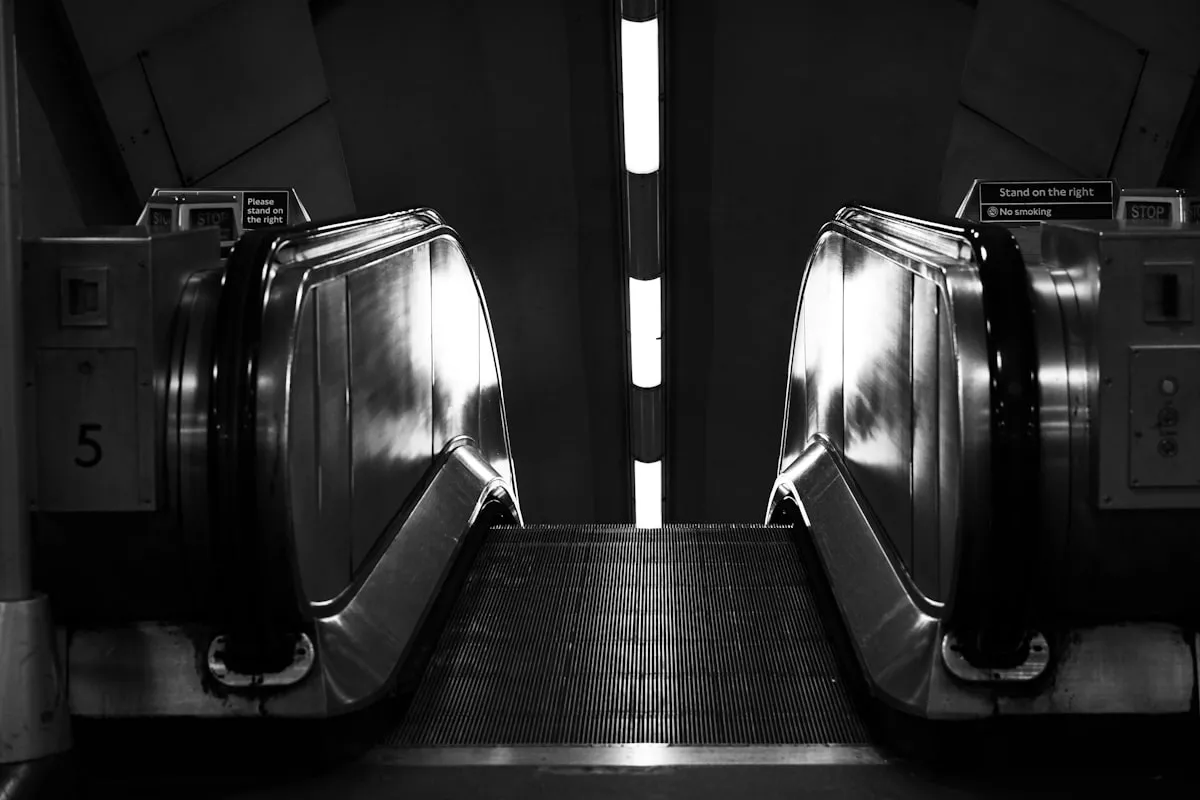
"Depth" on the London Underground can mean at least three different things, and TfL uses a different one depending on which fact sounds most impressive. What follows is a data-led attempt to untangle it: which lines are deepest, which stations win which version of the depth argument, what the numbers actually reveal about London's geology and engineering history, and how the network compares to the world's deepest metros.
What "depth" actually means (three definitions, three winners)
Before anyone writes a strongly worded letter, it is worth establishing that "deep" is doing quite a lot of work in this conversation.
Below street level
How far down you go from the pavement. The one most passengers care about, because it determines how long the escalator ride feels.
Below sea level
Useful for engineers and pub trivia. A platform near the Thames can be "below sea level" without being particularly far below ground.
Deepest point
Some stations have escalator shafts or passageways that go deeper than the platform itself. TfL tends to use this version for headlines.
TfL's well-circulated press release notes that Hampstead is the deepest station at 58.5 m (deepest point below ground), while the westbound Jubilee platform at Waterloo is 26 m below sea level. Different kinds of "deep". If you were hoping for a single winner, London does not do single winners. It does committees.
In this analysis, we use TfL's platform-depth dataset (FOI-0493-2223, CSV) to make like-for-like comparisons across lines and stations. Platform levels appear to be recorded with a +100 m offset, inferred from the data and TfL's published "26 m below sea level" Waterloo figure.
All lines in the FOI dataset, compared for depth
The network is best understood as two overlapping systems, and their depth profiles are dramatically different.
- Sub-surface lines (Metropolitan, District, Circle, Hammersmith & City) - built by cut-and-cover. Generally shallow.
- Deep-level "tube" lines (Bakerloo, Central, Jubilee, Northern, Piccadilly, Victoria, Waterloo & City) - bored tunnels. Generally much deeper.
That divide is not just trivia. It is the reason some stations feel like a brisk stroll down a ramp, while others feel like a minor expedition requiring snacks and a positive mindset.
| Line | Type | Mean depth (m) | Deepest platform (m) | Station |
|---|---|---|---|---|
| Victoria | Deep tube | 19.5 | 32.5 | Euston |
| Bakerloo | Deep tube | 19.5 | 25.8 | Regent's Park |
| Northern | Deep tube | 18.7 | 58.9 | Hampstead |
| Jubilee | Deep tube | 16.5 | 31.4 | Westminster |
| Piccadilly | Deep tube | 13.1 | 41.1 | Holborn |
| Waterloo & City | Deep tube | 12.9 | 20.0 | Bank |
| Central | Deep tube | 12.4 | 30.9 | Notting Hill Gate |
| District | Sub-surface | 5.7 | 9.0 | Aldgate East |
| Hammersmith & City | Sub-surface | 5.0 | 8.2 | Baker Street |
| Metropolitan | Sub-surface | 4.8 | 8.6 | Barbican |
The Circle line is not listed separately because it largely shares sub-surface track with the District, Hammersmith & City, and Metropolitan in central London. "Mean depth" is an average of below-ground platforms, not a measure of the deepest tunnel sections between stations. And for the Euston entry: the FOI dataset splits Euston into "City Branch" and "Charing X Branch" rows, so the Victoria line value appears under one of those entries rather than a single "Euston" row.
So which line is "deepest"?
If you mean deepest on average, the Victoria line edges it, closely followed by the Bakerloo. If you mean deepest single platform, the Northern line wins because Hampstead exists and refuses to be normal. If you mean deepest point below ground, TfL's headline answer is still Hampstead at 58.5 m.
The deepest stations
Using the same FOI dataset, the deepest stations by platform depth include:
| # | Station | Line | Platform depth (m) |
|---|---|---|---|
| 1 | Hampstead | Northern | 58.9 |
| 2 | Holborn | Piccadilly | 41.1 |
| 3 | Highgate | Northern | 37.3 |
| 4 | Covent Garden | Piccadilly | 37.0 |
| 5 | Belsize Park | Northern | 36.0 |
| 6 | Angel | Northern | 35.6 |
| 7 | Russell Square | Piccadilly | 33.2 |
| 8 | Leicester Square | Piccadilly | 33.2 |
| 9 | Euston | Victoria | 33.1 |
| 10 | Westminster | Jubilee | 31.4 |
Note the Northern line dominance: four of the top six stations. Deep stations often become famous not because of the number itself, but because of the experience. Angel's escalators have a vertical rise of 27.4 m and have been described as the highest in Western Europe. You do not need to be an engineer to appreciate the outcome. You just need to have missed the last escalator at Angel and faced the stairs with the haunted look of someone doing life choices in real time.
The deepest point below sea level
The Jubilee line platforms at Waterloo sit at 74.0 in the FOI dataset's "height above sea level (+100 m offset)" column. Subtract 100 and you get −26 m - meaning 26 metres below sea level. That makes it the lowest platform in the dataset. It neatly explains why "deep" can mean different things depending on whether you start counting from the pavement or from the ocean.
What the depths reveal about London
Up to this point we have treated depth as a ranking. The more interesting question is what those rankings reveal about London's geography, history, and engineering habits.
1 Deep because hill
Hampstead is the classic example. The ground level is high, and the line still has to keep a sensible gradient. The result is a station whose platforms are deep and whose "deepest point" becomes a TfL headline. Most of the Northern line stations that cluster near the top of the depth chart - Highgate, Belsize Park, Hampstead - owe their depth to north London topography.
2 Deep because interchange
Westminster is deep less because of a hill and more because it sits in a crowded part of the network, near sensitive foundations. Hopkins Architects describes the station's 30 m deep escalator box down to the Jubilee platforms, which is a very polite way of saying "we had no spare space and a lot of responsibility."
3 Deep because late planning
Later build phases and major modern projects are more willing to go deep from the start, because modern London has too many utilities, too many buildings, and too much economic activity to tolerate cut-and-cover disruption at scale. That logic runs through modern tunnelling practice, including Crossrail's published tunnelling methodology.
Line depth personalities
The mean-depth ranking hides a key point: some lines are consistently deep, while others have dramatic peaks.
Victoria & Bakerloo
Highest mean depths, suggesting relatively consistent deep-level alignment rather than one or two extreme outliers. Designed for capacity and speed through the centre.
Northern
The line of extremes: a high mean plus the network's deepest platforms, plus multiple stations in the 30 m-plus club. A patchwork of history, early tunnelling, and later expansions.
Jubilee
Mid-pack by average, but "spectacle depth" at key central stations like Westminster, reflecting the design ambitions of the Jubilee Line Extension era.
Sub-surface lines
Clustered shallow for a simple reason: their construction method all but forces it. Trenches do not do subtle.
Why each line sits where it does
Depth is rarely a stylistic preference. It is usually a negotiated settlement between geology, topography, money, and whatever was already underground when you arrived.
Metropolitan, District, Circle, Hammersmith & City: shallow by design
The sub-surface lines were largely built by cut-and-cover: dig a trench, build the railway, cover it up, hope the city forgives you. It produced shallow stations and the lasting London tradition of roadworks. The Metropolitan Railway, opening in 1863, was the world's first underground passenger railway. This method worked because it was achievable with the technology of the day, but it was disruptive and politically unpopular once the city's streets became too valuable to excavate at scale.
Bakerloo and Central: deep enough to get the job done
The Bakerloo and Central are classic deep-tube routes: they go deep to thread through central London without demolishing half of it. Their mean depths sit in the "consistently deep" band, but they do not chase the Northern's extremes.
Northern: deep because it is complicated
The Northern line is the obvious outlier, and Hampstead is the obvious reason. But the bigger story is that the Northern is a patchwork of history: early deep tunnelling, later expansions, and multiple branches that force alignment compromises. You can see that story written into the Northern line's depth profile - four of the ten deepest stations in the network.
Piccadilly: deep where central London demands it
The Piccadilly line hits one of the deepest platforms in the dataset at Holborn (over 41 m). That depth reflects the realities of threading a route through dense central infrastructure rather than a desire to be dramatic. It just happens to be dramatic anyway.
Victoria: deep, modern, and consistently so
The Victoria line scores highest on mean depth, which fits a line designed later with a clearer deep-level strategy, fewer shallow-era constraints, and an explicit focus on high-capacity central service.
Jubilee: the line that makes depth look expensive
The Jubilee line's extension-era stations, especially Westminster, show what happens when you build deep in a highly constrained historic area and decide the resulting concrete cavern should also be architecture.
Waterloo & City: deep because it has one job
The Waterloo & City line does not try to be everywhere. It tries to be useful. Its depths are modest by deep-tube standards, but it sits underground enough to do its work efficiently in the densest part of the city.
Depth has consequences
The deeper you go, the more your station becomes a vertical transport system with trains attached.
- Heat: Deep tunnels trap heat. "It's a bit warm" becomes "why is the air spicy?" on the hottest platforms. We covered this in detail in our piece on why the Tube is so hot.
- Vertical transport: Deep stations need escalators and lifts that run longer, harder, and more often. Angel's escalators have a 27.4 m vertical rise. Hampstead's original lifts remain among the deepest on the network.
- Evacuation: Deep stations complicate evacuations and ventilation, which is one reason modern designs make different choices about shafts and safety spaces.
- Engineering complexity: Depth means longer cable runs, more power substations, and tighter constraints on the four-rail power system and signalling that keep the railway running.
Does depth affect reliability?
We track service reliability across every line on our network dashboard, so we can test this. Over the past 12 months, the four sub-surface lines averaged 79.7% good service, while the seven deep-tube lines averaged 77.7%. That is closer than you might expect. Our travel time map lets you toggle lines on and off to see how losing a deep-tube line changes journey times across the network.
The real story is the variation within the deep-tube group. The Waterloo & City (the shallowest of the deep tubes, with a short, simple route) ran at 95.8% reliability. The Central and Piccadilly sat below 65%. Depth alone does not explain that gap: age of rolling stock, route complexity, and passenger load matter at least as much. But depth does compound every other problem. When something goes wrong 40 metres underground, getting equipment in and passengers out takes longer than it does at a cut-and-cover station five metres down.
These figures come from Tube Alerter's network dashboard, which tracks good-service time for every line using TfL's live status feed. The 12-month averages cover February 2025 to February 2026.
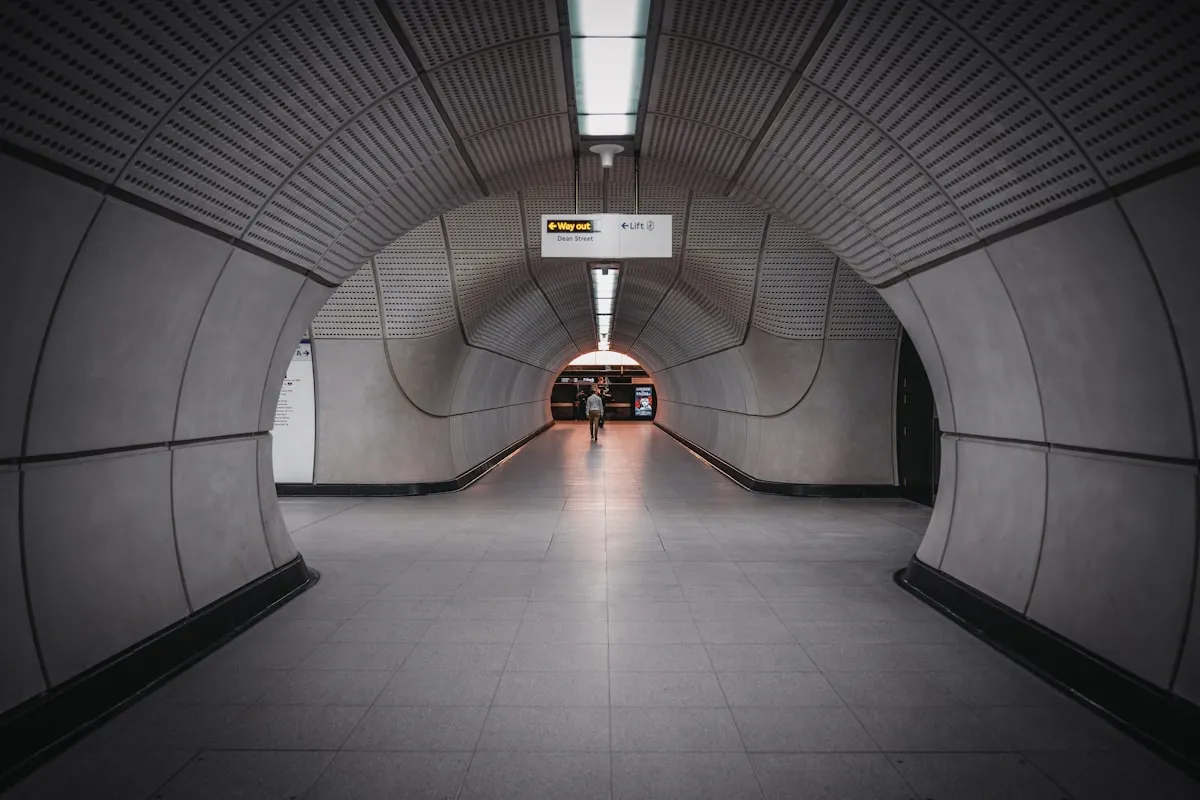
The Elizabeth line's TBM-bored tunnels at Tottenham Court Road: modern deep-level construction designed for minimal surface disruption. Photo by Andrea De Santis on Unsplash.
London's depths in global context
London feels deep because it is old, dense, and layered. Globally, however, it is not among the very deepest. Many of the world's deepest stations sit in cities where topography, geology, or metro-era timing pushes designers underground in a way London only does occasionally.
Depth figures outside London are reported using local definitions (platform level, track level, or deepest point) and are not always directly comparable. The safest approach is to say what metric you are using, which is what we have tried to do in this table.
| City | Station | Depth (m) | Why so deep |
|---|---|---|---|
| Chongqing | Hongyancun | ~116 (deepest point) | Mountain city, steep terrain, dense built environment |
| Kyiv | Arsenalna | 105.5 | High ground near the Dnipro river bank |
| Chongqing | Hongtudi | ~94.5 (lowest level) | Deep interchange in steep terrain |
| Saint Petersburg | Admiralteyskaya | ~86 | Difficult hydrogeology; deep system by necessity |
| Moscow | Park Pobedy | ~84 (varies by source) | Deep pylon station; design and geology factors |
| Portland, Oregon | Washington Park | ~79 | Deep tunnel under the West Hills |
| Hong Kong | HKU | ~70 | Deep cavern station in dense, hilly urban area |
| London | Hampstead | 58.5 (deepest point) | High ground plus alignment constraints |
London does not lose this comparison. It simply plays a different sport: it is a museum of construction methods and urban compromises, with depth as one of the exhibits. London did not start deep. London grew deep because the city above became too valuable to keep digging up.
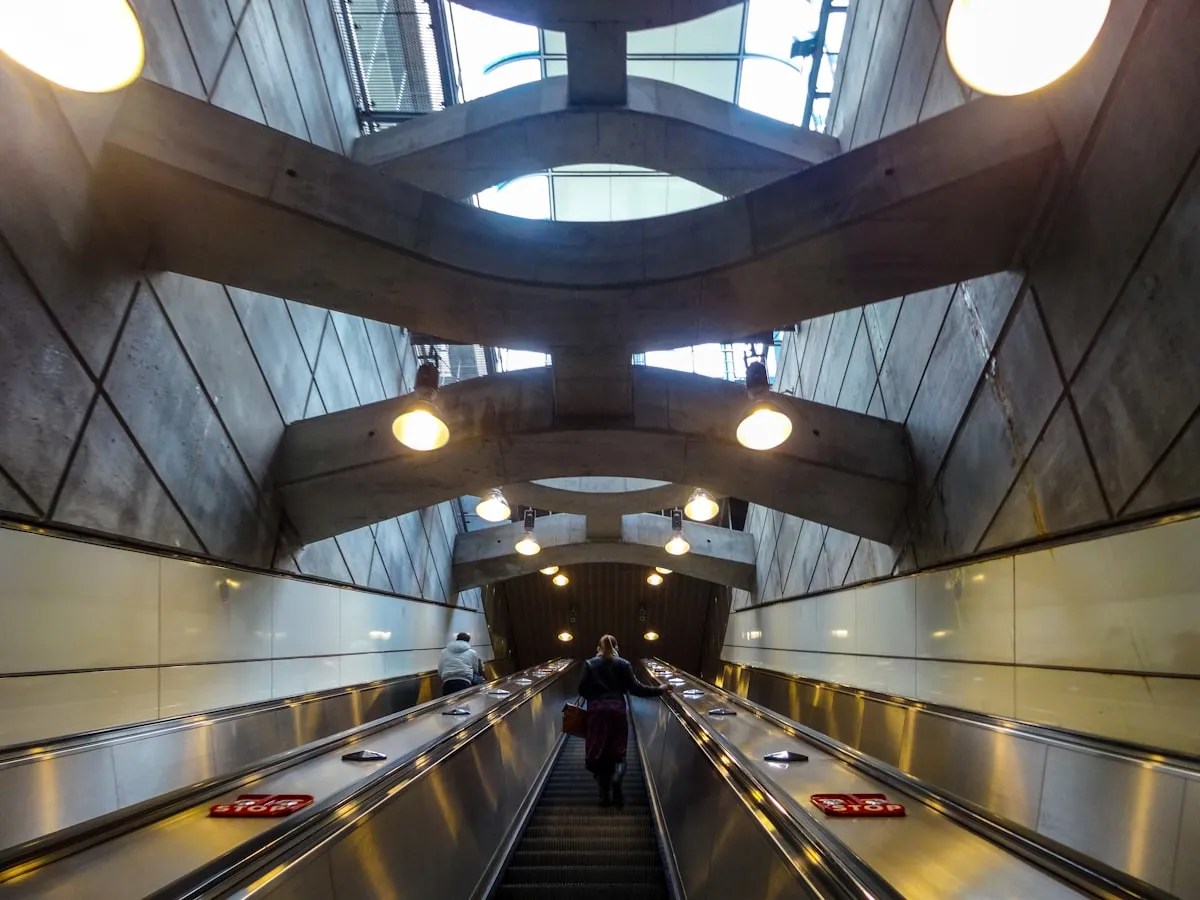
Deep metro escalators in a modern station: at the world's deepest stops, the descent itself becomes part of the journey. Photo by Nikolai Kolosov on Unsplash.
How London dug: construction methods through time
London's depth story is really a story of construction methods evolving to match a growing, hardening city.
London Clay: the sink that stopped sinking
London is famous for London Clay, and yes, it can be a comparatively friendly tunnelling medium: cohesive, relatively stable, and well understood. But London is not pure clay in a neat block. It is layered, intersected by gravel, sand, and old watercourses, and complicated by groundwater and centuries of building foundations.
The clay also matters for a reason covered in our piece on why the Tube is so hot: clay was originally an effective heat sink, absorbing the warmth generated by decades of train operations. But after a century-plus of thermal loading, the clay around the deepest tunnels has saturated. The deeper you go, the hotter it gets, and the harder it is to get that heat back out.
- "Depth" means three things: below street, below sea level, or deepest point. TfL uses whichever sounds best.
- Victoria and Bakerloo are deepest on average (~19.5 m mean platform depth), but the Northern line has the deepest single station: Hampstead at 58.9 m.
- The sub-surface lines sit at 5–9 m - a direct consequence of cut-and-cover construction.
- London is deep in places, but not deep by default: Chongqing, Kyiv, and Saint Petersburg all have stations that make Hampstead look shallow.
- Depth is rarely a choice, it is a negotiation between geology, topography, money, and whatever was already underground when you arrived.
- London did not start deep. It grew deep because the city above became too valuable to keep digging up.
- Transport for London, FOI-0493-2223: station ground levels and platform heights dataset (station depths CSV).
- TfL press release (5 July 2017) - "New map to help people with claustrophobia and anxiety" (Hampstead 58.5 m deepest station; Waterloo 26 m below sea level).
- TfL, "London Underground" - culture and heritage overview (Metropolitan Railway first underground line context).
- Geology Today / Geologists' Association (2009) - "Geology and the London Underground" (geology's influence on tunnelling and alignment).
- Crossrail Learning Legacy, Information Paper D8 - tunnel construction methodology.
- Hopkins Architects, "Westminster Underground Station" - 30 m deep escalator box, structural constraints.
- TriMet, "Washington Park MAX Station" - 260 ft (79 m) below ground.
- LMGT project page, Admiralteyskaya metro station - 86 m depth, escalator staging.
We build highly customisable tube alerts for the London Underground, Overground, DLR and Elizabeth line. Choose your lines, set your time window, pick your days, and filter by severity. We will only email you when something actually affects your commute.
Set up a free alert →
Why Is It So Hot on the Tube?
TfL temperature data, the physics of tunnel heat, and what is actually being done about it.
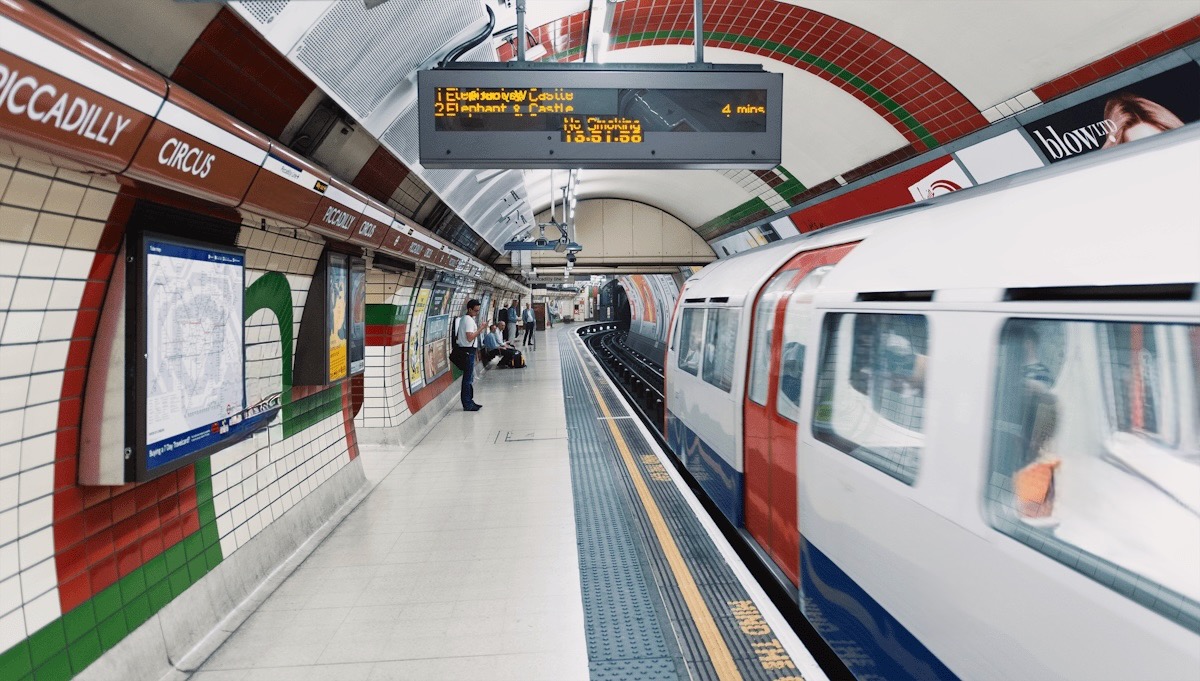
When Will the Tube Be Fully Automated?
Driverless trains, Grades of Automation, platform edge doors, and what TfL documents actually say.

Are Lime Bikes Worth It in London?
Pricing, passes, borough politics, and how dockless bikes fit alongside the Tube.
Travel Time Map
Click any station to see journey times everywhere. Toggle lines off to simulate disruptions.
This article is regularly updated as new data becomes available. Send us a tip if you spot something we should include.